


Past perfect continuous: Formula, uses, examples with exercises
elsaspeakadmin
October 9, 2026
Advanced Grammar
The past perfect continuous tense is used to emphasize how long an action had been happening. In this guide, we’ll dive into the definition, past continuous tense formula, signal words, along with exercises that you can practice at the end of the article.
What is the past perfect continuous tense?
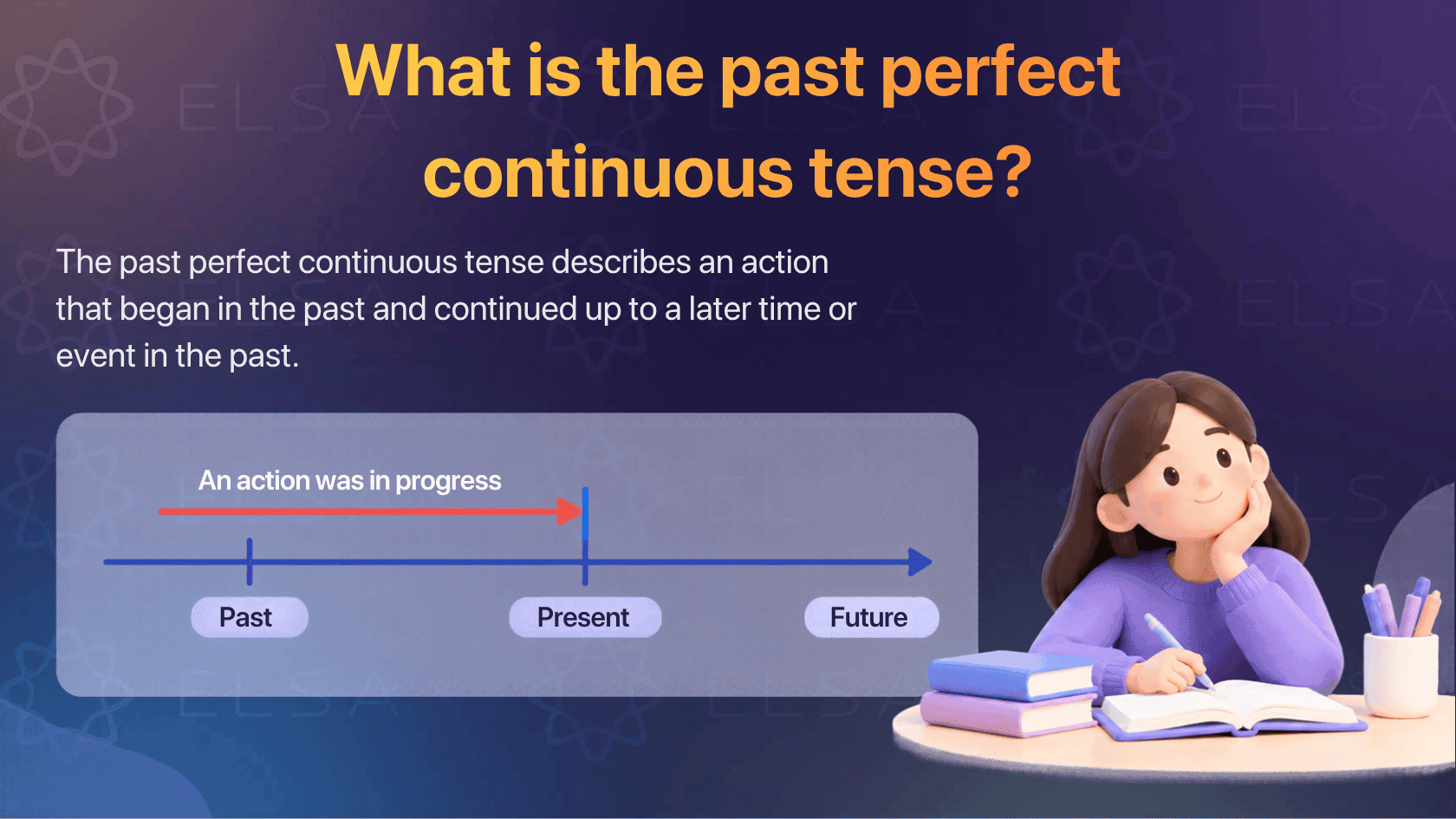
The past perfect continuous tense describes an action that began in the past and continued up to a later time or event in the past.
For example:
- She had been studying for two hours before dinner.
- They had been waiting for the bus when it finally arrived.
⇒ In both examples, the action started earlier and continued up to another event in the past.
When to use the past perfect continuous tense?
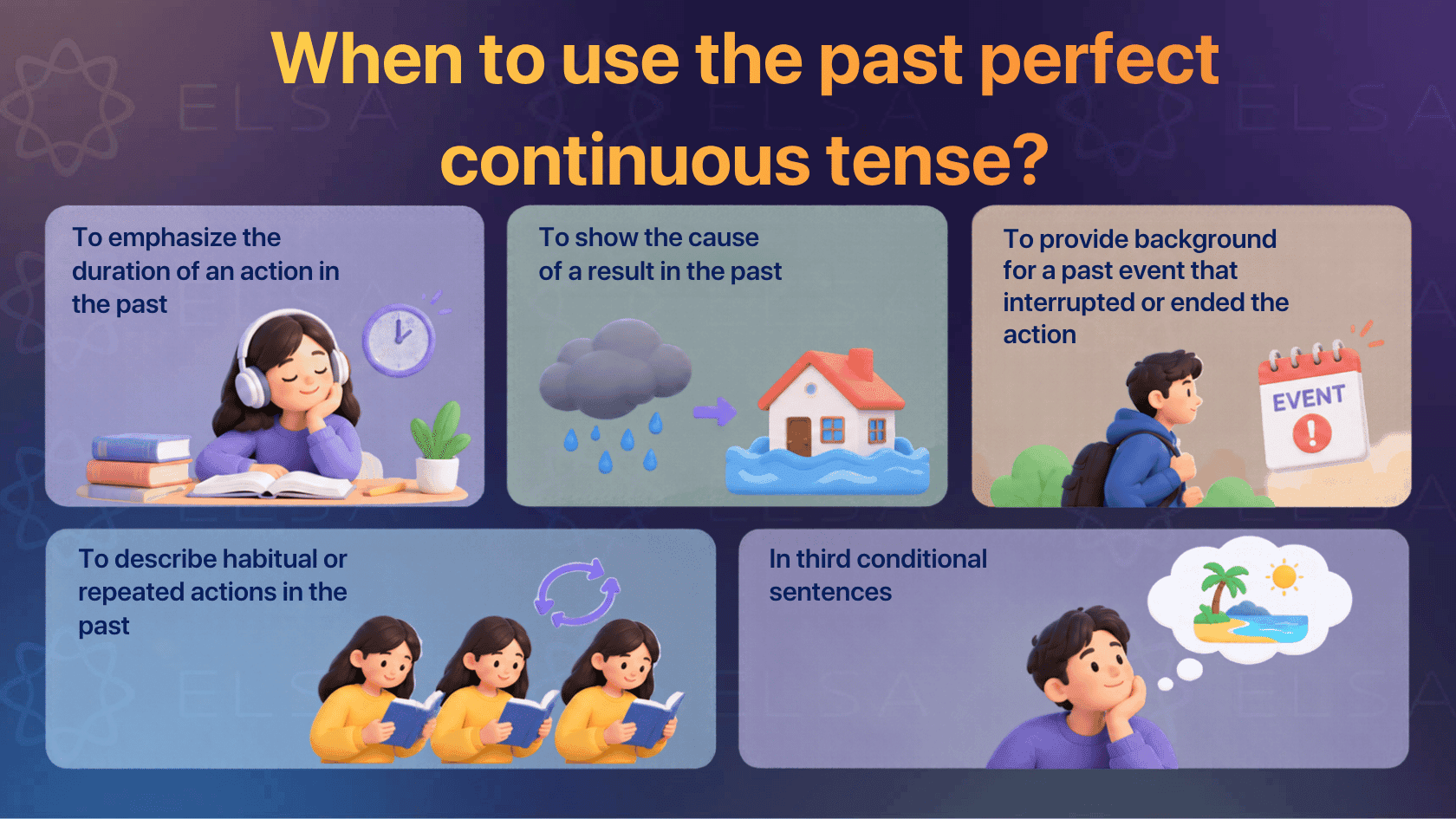
The uses of the past perfect continuous tense can be grouped into several common situations:
- To emphasize the duration of an action in the past: Use the tense when you want to show how long an activity had continued before another past point or event.
- For example: She had been working for five hours before she went home.
- To show the cause of a result in the past: Use it to explain why a particular condition or result existed at a certain point in the past.
- For example: He was tired because he had been running all morning.
- To provide background for a past event that interrupted or ended the action: It can describe what had been happening before another event interrupted or brought the action to an end.
- For example: They had been talking for 20 minutes when the teacher entered the room.
- To describe habitual or repeated actions in the past: Use it when an activity happened repeatedly over a period of time before another past event.
- For example: We had been meeting every Friday to prepare for the presentation.
- In third conditional sentences: The past perfect continuous can describe an unreal or hypothetical action that would have continued under a different past condition.
- For example: If she had been studying harder, she might have passed the exam.
Past perfect continuous tense formula
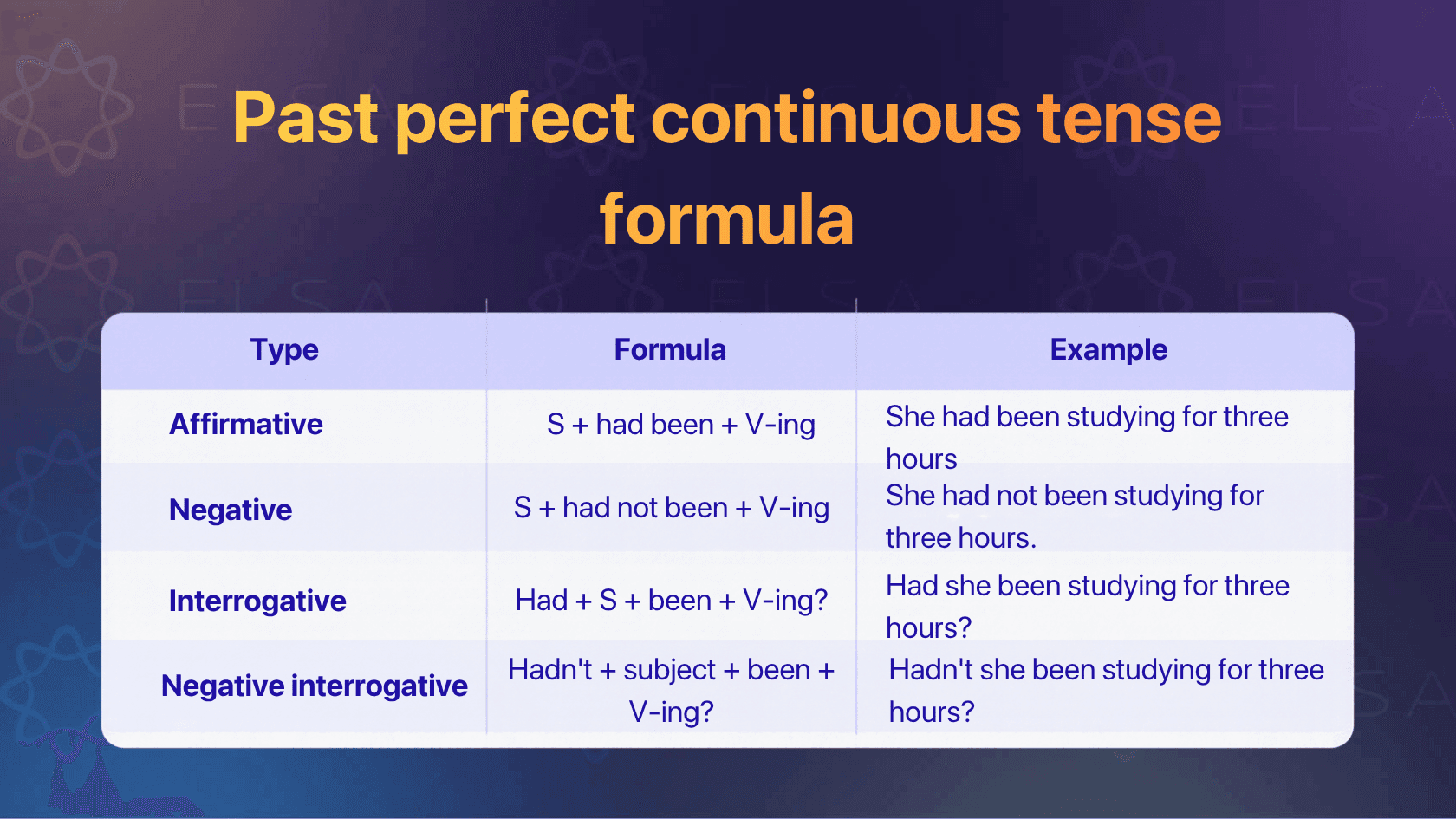
The past perfect continuous tense formula is had been + V-ing. The auxiliary had remains the same for all subjects, followed by been and the present participle of the main verb.
| Formula | Example | |
| Affirmative | S + had been + V-ing | She had been studying for three hours. |
| Negative | S + had not been + V-ing | She had not been studying for three hours. |
| Interrogative | Had + S + been + V-ing? Wh-word + had + S + been + V-ing? | Had she been studying for three hours? How long had she been studying? |
| Negative interrogative | Had + subject + not been + V-ing? Hadn't + subject + been + V-ing? | Hadn't she been studying for three hours? |
Past perfect continuous tense keywords
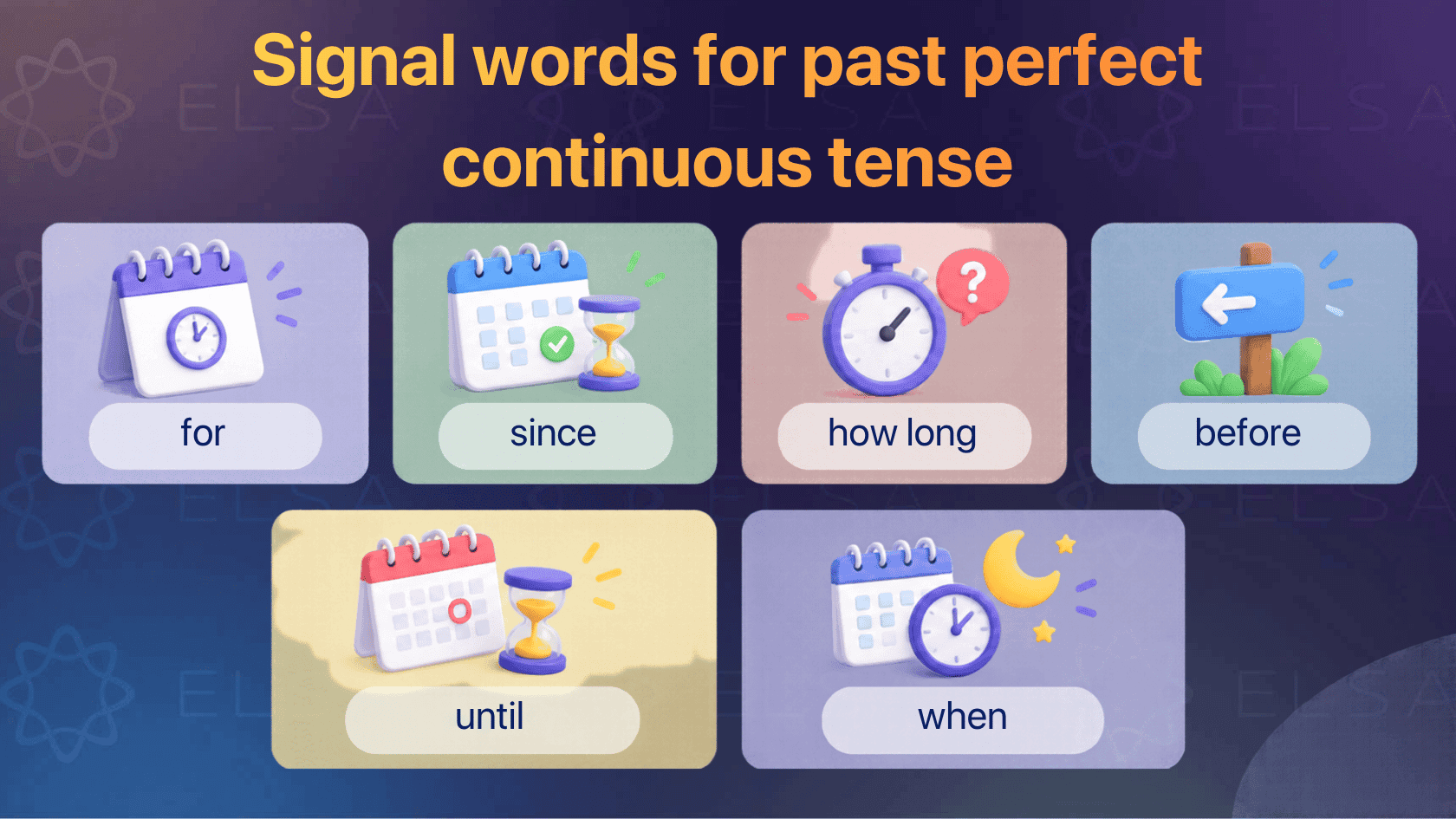
Certain time expressions commonly appear with the past perfect continuous to show when an action started, how long it continued, or what happened afterward. Common past perfect continuous keywords include for, since, how long, before, until, and when.
Signal words for past perfect continuous tense
| Signal word | Example |
| for | She had been studying for three hours before the test. |
| since | He had been working there since 2020 before he moved abroad. |
| how long | How long had you been waiting before the bus arrived? |
| before | They had been practicing before the performance started. |
| until | We had been talking until the meeting ended. |
| when | I had been sleeping when the phone suddenly rang. |
Keep in mind that these words do not automatically require the past perfect continuous. The tense depends on the meaning and the relationship between the past actions.
Phrasal adverbs in the past perfect continuous tense
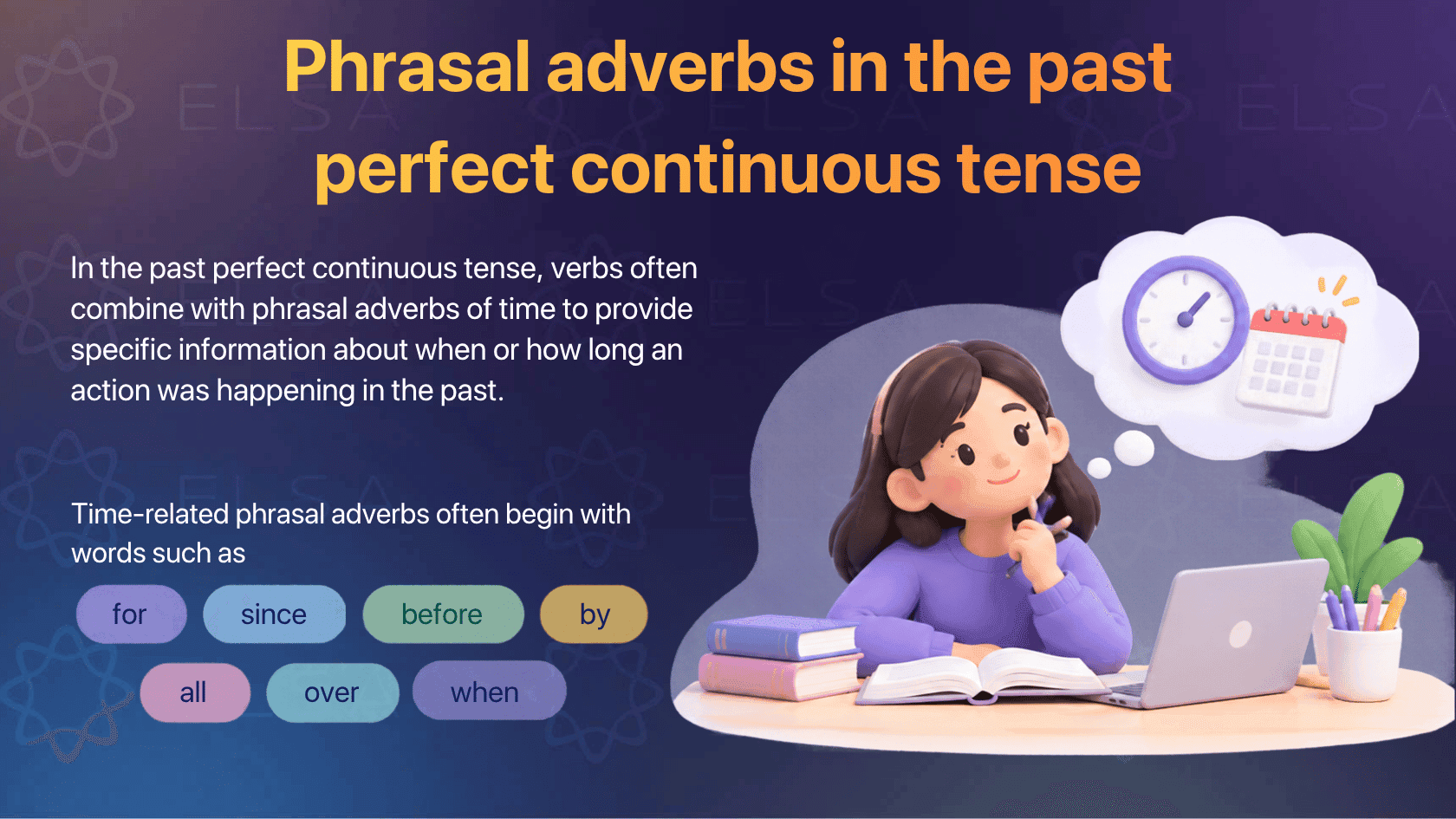
In the past perfect continuous tense, verbs often combine with phrasal adverbs of time to provide specific information about when or how long an action was happening in the past.
A phrasal adverb is a group of two or more words that functions as an adverb. Time-related phrasal adverbs often begin with words such as for, since, before, by, all, over, or when.
For example:
- By the time we arrived, she had been waiting outside all morning.
- They had been planning the trip for several months before they booked the tickets.
These phrases add information about the timing or duration of the action, making the meaning of the past perfect continuous clearer.
Past perfect continuous with other tenses
Understanding the difference between the past perfect continuous and similar tenses can help you choose the correct tense more easily.
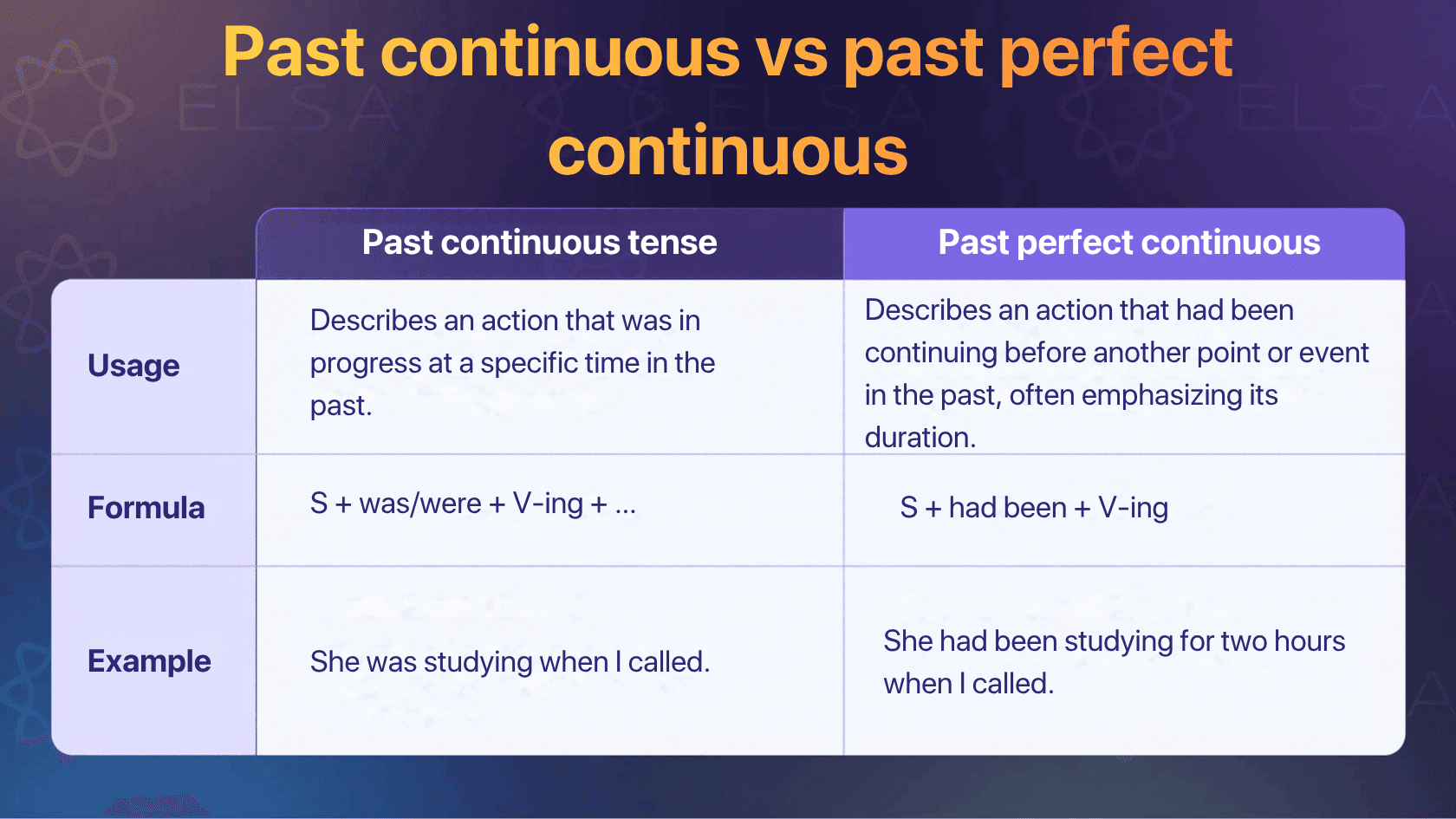
Past continuous vs past perfect continuous
| Past continuous | Past perfect continuous | |
| Usage | Describes an action that was in progress at a specific time in the past. | Describes an action that had been continuing before another point or event in the past, often emphasizing its duration. |
| Formula | S + was/were + V-ing | S + had been + V-ing |
| Example | She was studying when I called. | She had been studying for two hours when I called. |
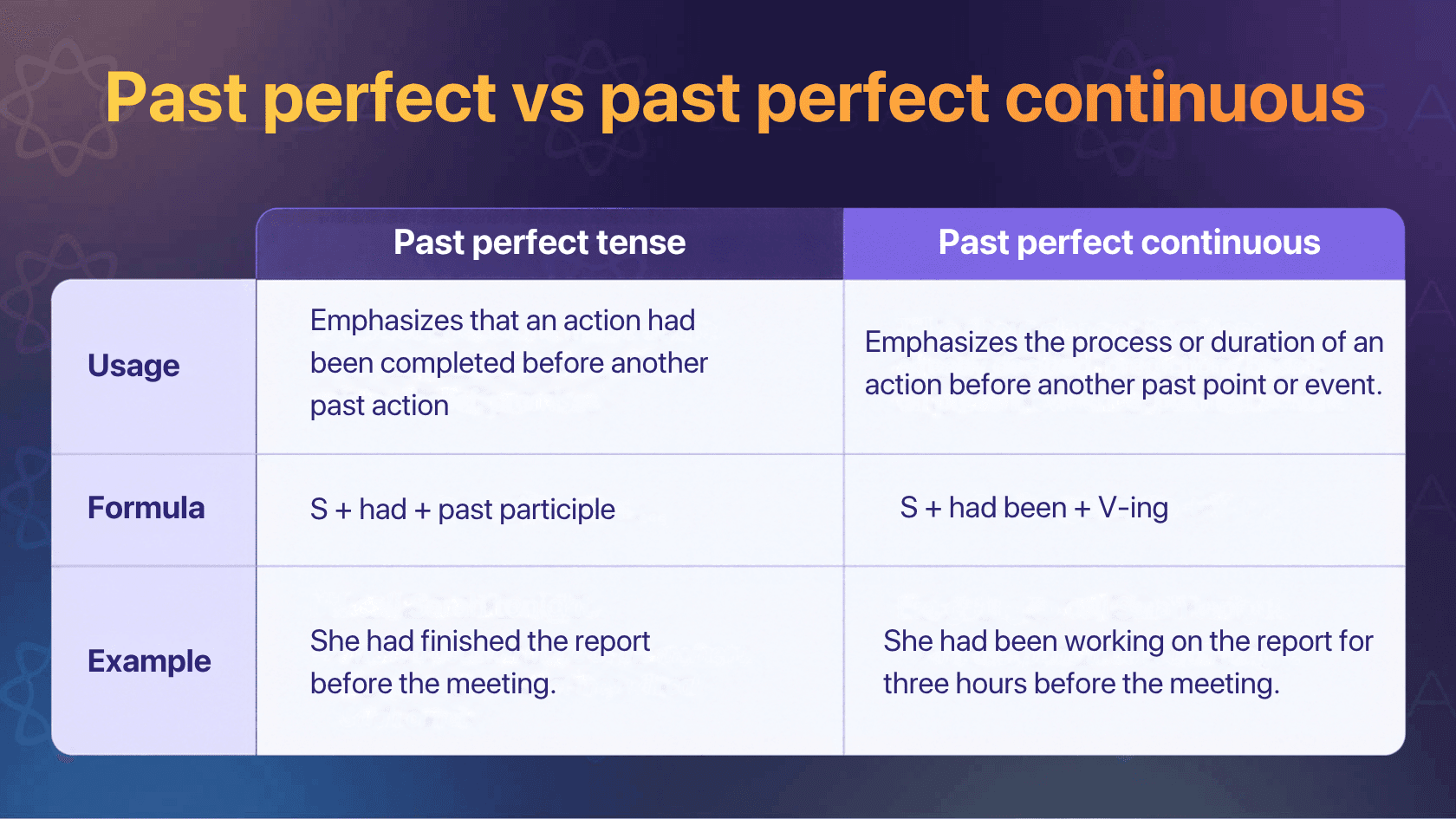
Past perfect vs past perfect continuous
| Past perfect tense | Past perfect continuous | |
| Usage | Emphasizes that an action had been completed before another past action | Emphasizes the process or duration of an action before another past point or event. |
| Formula | S + had + past participle | S + had been + V-ing |
| Example | She had finished the report before the meeting. | She had been working on the report for three hours before the meeting. |
Past perfect continuous exercises
Practice the past perfect continuous tense with the exercises below. Complete each sentence using the correct form of the verb in parentheses.
Exercise 1: Complete the sentences
- Sarah __________ (study) for two hours before her friend called.
- They __________ (wait) for the train since 7 a.m.
- He was tired because he __________ (work) all day.
- We __________ (practice) for weeks before the competition.
- How long __________ you __________ (learn) English before you moved abroad?
- The children __________ (play) outside for an hour when it started to rain.
- I __________ (look) for my keys for 20 minutes before I found them.
- She __________ not __________ (sleep) well before the exam.
- They __________ (live) in the city for five years before they moved.
- __________ he __________ (work) there for long before he resigned?
Exercise 2: Choose the correct option to complete each sentence.
1. She was exhausted because she ______ all night.
A. had studied
B. had been studying
C. was studying
2. We ______ for the bus for 30 minutes before it arrived.
A. had been waiting
B. waited
C. were waiting
3. ______ they been working on the project before the manager arrived?
A. Were
B. Had
C. Did
4. He ______ at the company since 2019 before he changed careers.
A. had worked
B. had been working
C. was working
5. How long ______ she been practicing before the competition?
A. did
B. was
C. had
6. They had been talking ______ two hours before the meeting started.
A. since
B. for
C. when
7. I ______ well because I had been worrying about the interview.
A. didn't sleep
B. wasn't sleeping
C. hadn't slept
8. If he ______ harder, he might have passed the exam.
A. had studied
B. had been studying
C. was studying
9. The team ______ every weekend before the tournament.
A. had been practicing
B. was practicing
C. had practiced
10. Hadn't you ______ for us before we arrived?
A. waited
B. been waiting
C. waiting
To summarize, the past perfect continuous tense is commonly used to describe an action that had been continuing before another point or event in the past. We hope this article has helped you understand the definition, past perfect continuous formula, and signal words for it. For more expert tips and lessons, remember to visit the Grammar category on ELSA Speak blog to practice your English skills.